Hurghada and the Red Sea coast: according to the UK FCDO (GOV.UK, updated 4 August 2026), security forces carry out routine checks on vehicles and at airports to protect resorts such as Sharm El Sheikh, Hurghada and Marsa Alam
Advised against by the FCDO: all travel to North Sinai and within 20 km (12 mi) of the Libyan border; all but essential travel to the northern part of South Sinai, the Ismailiyah Governorate east of the Suez Canal and most of the Western Desert
U.S. Department of State: avoid the northern and middle Sinai, all border areas and parts of the Western Desert (travel.state.gov, last updated August 11, 2025)
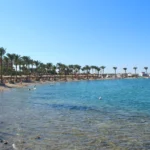
A Hurghada travel guide starts with the Red Sea: coral reefs reached by boat or straight from the beach, near-guaranteed sunshine and water you can swim in almost all year. A former fishing village that has become the largest resort on Egypt’s coast, Hurghada stretches along dozens of kilometres of shoreline, from the old El Dahar district and the marina to the resorts of Sahl Hasheesh and Makadi. It is also a practical base for a trip to Luxor. This guide covers what to do in Hurghada, when to go, where to stay and how much to budget.
Hurghada at a glance
CountryEgypt, Red Sea Governorate
LanguageArabicEnglish, German and Russian widely spoken in hotels
The best time to visit Hurghada is March to May and October to November: 26 to 34 °C (79 to 93 °F) in the afternoon, practically no rain and a pleasant sea. Winter (December to February) stays mild by day, around 22 to 24 °C (72 to 75 °F), but evenings are cool and the water colder. From June to September, the heat tops 35 °C (95 °F) in the afternoon: this is the season for divers and low prices, provided you can handle the heat.
Hurghada has a desert climate: the sun shines almost every day and annual rainfall does not even reach 10 mm (0.4 in). The real deciding factors are the heat, the water temperature and the wind, often strong on this coast, especially in the afternoon. Here are the official normals for the airport station.
When to go to Hurghada: key points
Best times: March to May, October and November
For diving and snorkeling: April to November, with the warmest water in summer and early autumn
For winter sun: December to February, 22 to 24 °C (72 to 75 °F) in the afternoon, but 11 to 13 °C (52 to 55 °F) at night
Hottest month: August, average high of 37.5 °C (100 °F)
Rain: almost none; at most 2.3 mm (0.1 in) in October
For a trip to Luxor: October to April, as Upper Egypt is scorching in summer
Hurghada climate month by month
Month
High
Low
Rain
Crowds
Prices
Verdict
January
22.2 °C (72 °F)
11.6 °C (53 °F)
0.7 mm (0.0 in)
Low
Low
⚠️ Mild by day, cool water
February
23.5 °C (74 °F)
12.4 °C (54 °F)
0.5 mm (0.0 in)
Medium (winter holidays)
Medium
⚠️ Pleasant in the sun, cool evenings
March
26.2 °C (79 °F)
15.1 °C (59 °F)
1.1 mm (0.0 in)
Medium
Medium
✅ Mild, good time for Luxor
April
29.9 °C (86 °F)
18.7 °C (66 °F)
0.0 mm (0.0 in)
High (Easter)
High
✅ One of the best months
May
33.7 °C (93 °F)
23.1 °C (74 °F)
0.0 mm (0.0 in)
Medium
Medium
✅ Hot, sea warming up
June
36.3 °C (97 °F)
26.1 °C (79 °F)
0.0 mm (0.0 in)
Medium
Low
⚠️ Very hot, good for diving
July
37.4 °C (99 °F)
27.8 °C (82 °F)
0.0 mm (0.0 in)
High
Medium
❌ Scorching in the afternoon
August
37.5 °C (100 °F)
28.0 °C (82 °F)
0.0 mm (0.0 in)
Very high
High
❌ Hottest, very busy
September
35.3 °C (96 °F)
25.6 °C (78 °F)
0.0 mm (0.0 in)
Medium
Medium
⚠️ Very hot, warm sea
October
32.1 °C (90 °F)
22.2 °C (72 °F)
2.3 mm (0.1 in)
High (autumn holidays)
High
✅ Hot and dry, warm sea
November
27.8 °C (82 °F)
17.7 °C (64 °F)
2.2 mm (0.1 in)
Medium
Medium
✅ Ideal for beach and excursions
December
23.8 °C (75 °F)
13.4 °C (56 °F)
0.6 mm (0.0 in)
High (festive season)
High
⚠️ Mild, festive season
Temperatures and rainfall: 1991-2020 normals for the Hurghada International Airport station, Egyptian Meteorological Authority, published by the World Meteorological Organization (NOAA archive). Crowds and prices: estimate based on European school holidays.
Hurghada season by season
Spring (March to May): 26 to 34 °C (79 to 93 °F), a warming sea, excellent visibility for snorkeling. Episodes of khamsin, a hot sand-laden wind, can haze the sky for a few hours to a few days. April is busy around Easter.
Summer (June to September): 36 to 37.5 °C (97 to 100 °F) in the afternoon and nights around 26 to 28 °C (79 to 82 °F). The sea breeze makes the heat more bearable than in Luxor. Warm water, ideal for diving; low prices in June and September, highest in August.
Autumn (October-November): the most balanced period: 28 to 32 °C (82 to 90 °F), a still-warm sea, and trips to Luxor comfortable again. The year’s rare showers tend to fall in this season.
Winter (December to February): 22 to 24 °C (72 to 75 °F) in the sun, but a cool wind and evenings around 12 °C (54 °F). The water is cooler: a wetsuit is useful for diving. A good season to combine beach and the temples of Luxor.
Hurghada month by month
January: The coolest month (22 °C, or 72 °F, by day; 11.6 °C, or 53 °F, at night). Winter sun and low prices after the holidays, but swimming is for the hardy.
February: 23.5 °C (74 °F), almost no rain. Winter holidays push prices up a little. A sweater is essential in the evening.
March: 26 °C (79 °F): a very good month to combine the Red Sea and Luxor. Wind possible.
April: 30 °C (86 °F), a pleasant sea, dry skies. High demand during the Easter holidays: book early.
May: Nearly 34 °C (93 °F): hot but still bearable, warming water, falling prices.
June: 36 °C (97 °F). A good month for diving and small budgets, before the summer holidays.
July: 37.4 °C (99 °F) in the afternoon, nearly 28 °C (82 °F) at night. Plan activities for the morning or late afternoon.
August: The hottest (37.5 °C, or 100 °F) and busiest month. Warm sea, highest prices.
September: 35 °C (95 °F), a still very warm sea, fewer people after the summer holidays: a good deal for diving.
October: 32 °C (90 °F), warm sea: one of the best months. Autumn school holidays are in high demand.
November: 28 °C (82 °F), ideal for the beach and trips to Luxor. The water is still pleasant.
December: 24 °C (75 °F) by day, 13 °C (55 °F) at night. Winter sun; high prices around Christmas and New Year.
To compare with the rest of the country (Cairo, Luxor, Aswan), see our article on when to go to Egypt.
Things to do in Hurghada: the highlights
The Giftun Islands and snorkeling
The classic excursion: a day by boat to the Giftun Islands, off Hurghada, in a protected marine area. Trips combine two or three snorkeling stops on the reefs with a break on a white sand beach. Check whether park fees are included. Compare boats: the number of passengers, the equipment provided and whether a guide gets in the water make all the difference.
Scuba diving
Hurghada has a great many dive centres, for first-timers and experienced divers alike: reefs around the islands, wrecks such as the Rosalie Moller, multi-day liveaboard trips. According to the UK FCDO (GOV.UK, updated 4 August 2026), safety standards of Red Sea dive operators and boats vary considerably: book through reputable operators, ask for a thorough safety briefing, do not dive below your insurance policy’s depth limit and make sure your insurance or the dive company covers air or sea rescue, which can cost more than 4,000 US dollars per hour. The FCDO adds that shark attacks are rare but have happened in the Red Sea region. Further south, Marsa Alam and its reefs have their own guide.
El Dahar, old Hurghada
In the north of the city, El Dahar is the liveliest district day to day: souk, spice shops, small restaurants and cafés. It is the place to see the city beyond the hotels. Haggle and agree prices before any purchase. Nearby, the large El Mina Mosque on the seafront can be seen from afar; visiting the interior depends on prayer times and requires covering clothing.
The marina and the promenade
Hurghada Marina, between El Dahar and Sakkala, gathers restaurants, cafés and bars around the pleasure boats. It is the place to go out in the evening, along with the Sakkala district and the nearby pedestrian street. Several boat trips leave from here.
El Gouna
About 30 km (19 mi) to the north, El Gouna is a resort built around lagoons and canals, with a pedestrian centre (Downtown), a marina and kitesurfing spots. You can spend a day there or stay for more peace and quiet.
The desert: quad bikes and Bedouin village
Quad bike or buggy trips into the desert, often in the late afternoon, usually end with a meal and a show in a « Bedouin village ». It is very touristy. The UK FCDO reports several serious quad bike accidents involving British nationals in resort areas and advises always wearing a crash helmet (GOV.UK, updated 4 August 2026); choose an operator that provides helmets and scarves and avoids the hottest hours in summer.
Family activities
Hurghada has many water parks, often part of hotels, as well as the Grand Aquarium, Sand City (sand sculptures) and Mini Egypt Park, which displays models of Egyptian monuments. Glass-bottom boat and semi-submarine trips let children see the coral without diving.
Luxor as a day trip
Luxor is about four hours away by road. A day trip, leaving very early, lets you see Karnak and the Valley of the Kings; two days are more comfortable. Avoid it in high summer, when Luxor tops 40 °C (104 °F). For a full tour (Cairo, Aswan, a Nile cruise), see our Egypt travel guide.
Itineraries
One week in Hurghada
Day 1: arrival, check-in, beach
Day 2: boat day to the Giftun Islands (snorkeling)
Day 3: El Dahar, its souk, El Mina Mosque, evening at the marina
Day 4: a try dive or a reef dive
Day 5: trip to Luxor (leaving before dawn) or a day in El Gouna
Day 6: quad bike trip in the desert in the late afternoon
Day 7: a last swim and departure
10 to 14 days: the Red Sea and the Nile Valley
Days 1 to 3: Cairo, Giza and the Grand Egyptian Museum
Days 4 to 7: Luxor, then Aswan (by train or on a Nile cruise)
Day 8: road from Luxor to Hurghada (about 4 hours)
Days 9 to 13: Hurghada: the Giftun Islands, diving, El Gouna
Day 14: flight home from Hurghada
Who is Hurghada for?
Here is our view by traveler profile, based on the stops, budget and conditions covered in this guide to Hurghada.
Profile
Our view
Beach and sun
✅ Sun almost every day, under 10 mm (0.4 in) of rain a year, water you can swim in almost all year.
Diving and snorkeling
✅ The Giftun Islands, wrecks and liveaboards; check the operator’s safety standards.
Families
✅ Water parks, the Grand Aquarium, glass-bottom boats and all-inclusive deals.
Tight budget
✅ Roughly US$45 to 80 per person per day; excursions are what push the bill up.
Couples
✅ El Gouna and its lagoons, or the quieter resorts of Sahl Hasheesh and Makadi Bay.
Culture
⚠️ Little heritage on site: Luxor is about four hours away by road, best avoided in high summer.
Budget for a stay in Hurghada
Hurghada is a fairly affordable destination, especially on an all-inclusive package booked with the flight. Once there, excursions are often what push the bill up. Rough amounts per person per day, excluding flights:
Item
Tight budget
Comfort
Accommodation (sharing a double room)
roughly US$17 to 34
roughly US$65 to 135 (all-inclusive)
Meals
roughly US$9 to 17
roughly US$22 to 45 (or included)
Local transport
roughly US$2 to 6
roughly US$11 to 22
Activities and excursions
roughly US$11 to 22
roughly US$34 to 67
Total per day
roughly US$45 to 80
roughly US$110 to 225
Rough estimates, varying with the season and the exchange rate; converted from our euro estimates at the European Central Bank reference rate of 23 October 2026 (EUR/USD). Prices peak during school holidays and the festive season.
To keep costs down: aim for June, September or January outside the holidays, compare all-inclusive deals, book boat trips with well-reviewed operators rather than the first tout you meet, and eat in El Dahar rather than at the marina.
Getting around Hurghada
Airport: the international airport is south-west of the city, about 15 to 30 minutes from the main hotel areas. Transfers are often included in packages; otherwise take a taxi and agree the fare in advance.
Taxis: plentiful; meters are rarely used: agree the fare before getting in. Ride-hailing apps work in the city.
Minibuses: local microbuses run along the main road for a few pounds; handy but hard for a visitor to figure out.
To Luxor and Cairo: long-distance bus, car with driver or a domestic flight to Cairo. The U.S. Department of State considers public buses, microbuses and trains unsafe, and notes that driving in Egypt is challenging for foreigners (travel.state.gov, last updated August 11, 2025).
Where to stay in Hurghada
El Dahar and Sakkala: simple hotels and apartments, close to the souk and the marina; practical for small budgets, but the beaches are less attractive
Village Road and the hotel strip south of the centre: large seafront hotels, restaurants and shops within walking distance
Sahl Hasheesh, Makadi Bay, Soma Bay: isolated resorts further south, quieter, often all-inclusive, some with reefs reachable from the beach
El Gouna: to the north, a small-town feel with lagoons, boutique hotels and kitesurfing
For snorkeling, check whether the hotel has a jetty or a reef off the beach: a real plus compared with a plain sandy beach.
Entry requirements, health and safety
US citizens
According to the U.S. Department of State (travel.state.gov, last updated August 11, 2025), US citizens need a visa. You can apply for an e-visa before travel on the Egyptian government’s official website (some unofficial sites charge double), or get a renewable single-entry 30-day tourist visa on arrival at Egyptian airports for about $25 in cash (US dollars); a multiple-entry visa costs about $60.
Travelers arriving from a yellow fever-infected area must show proof of vaccination. Keep prescription medicines in their original packaging with a doctor’s letter (travel.state.gov).
UK citizens
According to the UK FCDO (GOV.UK foreign travel advice, updated 4 August 2026), British passport holders normally need a visa. Tourist e-visas bought online in advance are valid for up to 3 months; a visa on arrival costs 30 US dollars (cash only) at kiosks before immigration and is valid for up to 30 days. You do not need to buy a visa from an agent.
Your passport must have an expiry date at least 6 months after the date you arrive and at least one blank page (GOV.UK).
The two sources give different visa-on-arrival prices (about $25 for travel.state.gov, 30 US dollars for GOV.UK): check with the Egyptian embassy before you travel. Entry requirements checked on 26 October 2026. More details in our guide Egypt visa.
Health and safety
Health: according to the UK FCDO, check vaccine recommendations at least 8 weeks before your trip (TravelHealthPro); health risks include dengue. The U.S. Department of State asks travelers to be up to date on all CDC-recommended vaccinations and notes that Red Sea beaches are generally unpolluted.
Sexual assault: the UK FCDO reports that most cases reported to the British Embassy took place in Red Sea tourist resorts, often committed by someone the victim had already met, including hotel workers and excursion staff (GOV.UK, updated 4 August 2026).
Boats: the U.S. Department of State reports multiple fatal accidents involving tourist boats along Egypt’s Red Sea coast, especially overnight dive boats (travel.state.gov).
Emergencies: ambulance 123, police 122, tourist police 126 to report a crime (GOV.UK, updated 4 August 2026).
Insurance: see our travel insurance guide; make sure it covers the activities you plan and repatriation.
Practical tips for Hurghada
Money: Egyptian pounds are available from ATMs in the city. Bring US dollars in cash for the visa on arrival, and small notes for tips, which are very much expected. Our currency converter helps you work out your budget.
Haggling: it is the rule in the souk, in taxis and for excursions sold in the street. Always agree the price first.
Dress: swimwear on the beach and at the hotel; covering clothing (shoulders, knees) in town and at places of worship.
Sun and wind: sunscreen, a hat and sunglasses all year; a light jacket for winter evenings and boat trips.
Internet: hotel wifi is patchy. A local SIM card or an eSIM lets you use maps and ride-hailing apps.
Ramadan: according to GOV.UK, it is culturally insensitive to eat, drink or smoke in public during daylight hours; hotels operate normally.
Coral: coral cuts infect easily and need proper care; do not touch or take coral.
October and April are often the most balanced: 30 to 32 °C (86 to 90 °F) in the afternoon, a warm sea and no rain. March, May and November are also very pleasant. July and August are the hottest (over 37 °C, or 99 °F).
Is the weather good in Hurghada in January?
Yes, sunshine is almost guaranteed, with 22 °C (72 °F) in the afternoon on average. But nights drop to around 12 °C (54 °F), the wind can be cool and the water is colder: bring a wetsuit for diving.
Is it safe to go to Hurghada?
According to the UK FCDO (GOV.UK, updated 4 August 2026), security forces carry out routine checks to protect Red Sea resorts such as Hurghada. The FCDO advises against travel to North Sinai and the Libyan border area, among others; check the latest advice from GOV.UK and travel.state.gov before you go.
Do you need a visa for Hurghada?
Yes. US and UK citizens need a visa: an e-visa bought online in advance or a visa on arrival paid in US dollars cash (about $25 according to travel.state.gov, 30 US dollars according to GOV.UK). UK travelers need a passport valid at least 6 months after arrival.
What is there to do in Hurghada in the evening?
The marina and the Sakkala district have most of the restaurants, cafés and bars. El Dahar is lively around the souk. Many hotels also put on entertainment, and desert trips often end with a dinner show.
Can you visit Luxor from Hurghada?
Yes, Luxor is about four hours away by road. A day trip is long but doable; two days let you see Karnak, the Valley of the Kings and the Temple of Hatshepsut at a more relaxed pace. Go between October and April.
Our sources
Entry, health and safety information read on 26 October 2026: U.S. Department of State, Egypt country information (travel.state.gov, last updated August 11, 2025), and UK FCDO, foreign travel advice for Egypt (GOV.UK, updated 4 August 2026)
Climate data: 1991-2020 normals for the Hurghada International Airport station, Egyptian Meteorological Authority, published by the World Meteorological Organization (NOAA archive)
European Central Bank, euro reference rates of 23 October 2026 (EUR/USD), for the budget conversion


 FlightsKiwi.comCompare flights and airline combinations to Hurghada.Compare flights