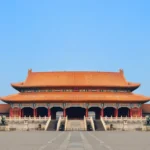
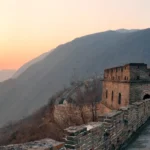
Looking for things to do in Beijing? Visit the Forbidden City and Tiananmen Square, walk the Great Wall at Mutianyu or Jinshanling, see the Temple of Heaven, the Summer Palace and the Lama Temple, get lost in the hutongs around the Shichahai lakes and try Peking duck. To visit Beijing, allow 4 to 5 days, including one day for the Wall. The best times are April-May and September-October, avoiding « Golden Week » from 1 to 7 October. Before you go, check the entry requirements in our China visa page.
China’s capital for more than six centuries, Beijing brings together, within a few square kilometres, the palaces of the Ming and Qing dynasties, temples, imperial parks and neighbourhoods of old alleys, in the middle of a sprawling metropolis. The metro serves most of the sights, and the Great Wall is an easy day trip. This guide helps you plan your stay: sights, neighbourhoods, itinerary, month-by-month climate, entry requirements and budget.
For your day out of the city, our guide to visiting the Great Wall of China from Beijing compares Badaling and Mutianyu, with official opening hours and public transport access.

Our travel deals for Beijing
Affiliate links: we earn a commission, at no extra cost to you.
 FlightsKiwi.comCompare flights and airline combinations to Beijing.Compare flights
- eSIMAiraloData plan to install before you leave (eSIM-compatible phone).See plans


Beijing at a glance
- Airports Beijing Capital(north-east) and Beijing Daxing (south), both linked to the centre by an express metro line
- Ideal length 4 to 5 days, including the Great Wall
- Best times April-May and September-October, outside Golden Week1-7 October
- Time zone UTC+8 all year (China does not change its clocks): 8 hours ahead of London in winter, 7 in summer; 13 hours ahead of New York in winter, 12 in summer · detailsLocal time now: –:–
- Entry US: visa required (visa-free transit exceptions); UK: visa-free up to 30 days until 31 December 2026 · US: travel.state.gov · UK: GOV.UK
- Currency yuan (renminbi, CNY); mobile payment almost universal · currencies
- Electricity check plug types and voltage before you travel · plugs
- Budget see our budget section
Things to do in Beijing: the highlights
The Forbidden City (Palace Museum)
Home to the emperors of the Ming and Qing dynasties from the early 15th century to 1912, the Forbidden City is the largest complex of ancient palaces in China and a UNESCO World Heritage Site. You walk through it from south to north, from the Meridian Gate to the Gate of Divine Prowess, past the three great ceremonial halls and then the inner courtyards where the imperial family lived. Allow at least half a day. Entry is by name-based online booking with your passport number, and visitor numbers are capped each day: book as soon as slots open, especially during Chinese holidays. Also check the weekly closing day on the museum’s official website before you go.
Tiananmen Square
South of the Forbidden City, Tiananmen Square is one of the largest city squares in the world. It is lined by the Great Hall of the People, the National Museum of China and the Mausoleum of Mao Zedong. Access is through security checkpoints, passport in hand; queues can be long in the morning. The flag-raising ceremony at dawn draws many Chinese visitors.
For your first day, our guide to visiting the Forbidden City in Beijing covers passport-based booking, official opening hours and routes from 2 hours to a full day.
The Great Wall from Beijing
Several restored sections of the Great Wall can be visited on a day trip from Beijing. Badaling, the closest and most accessible (train from the city), is also the busiest. Mutianyu, about two hours’ drive north-east, is a good compromise: a restored section, a cable car and chairlift, wooded scenery. Jinshanling and Simatai, further away, suit walkers looking for wilder-looking stretches and fewer people. Wear good shoes: the steps are high and uneven.
Safety point: the UK FCDO (GOV.UK, updated 27 August 2026) advises against hiking alone in isolated areas, including on the Great Wall, because of unpredictable weather and the risk of injury; even in a group, leave your itinerary, mobile number and expected return time at your hotel or with someone else. Stick to the sections officially open to visitors.
The Temple of Heaven
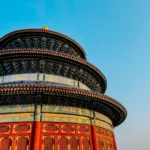
In a large park south of the centre, the Temple of Heaven was where the emperor prayed for good harvests. Its most famous building, the Hall of Prayer for Good Harvests, round and topped by three blue roofs, is one of Beijing’s symbols. Come early in the morning, when local residents practise tai chi, dance, sing or play cards.
The Summer Palace
In the north-west of the city, the Summer Palace (Yiheyuan) is a vast imperial garden laid out around Kunming Lake and Longevity Hill: a long painted covered gallery, pavilions, the Seventeen-Arch Bridge and the Marble Boat. Allow half a day. The site, a UNESCO World Heritage Site, is especially pleasant in spring and autumn. Nearby, the ruins of the Old Summer Palace (Yuanmingyuan) recall its looting by British and French troops in 1860.
The Lama Temple and the hutongs
The Lama Temple (Yonghegong), a former palace turned Tibetan Buddhist monastery, houses a huge Buddha statue carved from a single sandalwood trunk. Close by, the Confucius Temple and the former Imperial College are quieter. The hutongs, alleys lined with courtyard houses, are best explored on foot or by bike around Nanluoguxiang (very touristy) and the Shichahai lakes (Houhai, Qianhai), with the Drum and Bell Towers. People live here: be discreet.
Jingshan, Beihai and the imperial parks
Just north of the Forbidden City, the hill in Jingshan Park offers the best view over the palace’s golden roofs, especially in the late afternoon. Next door, Beihai Park surrounds a lake overlooked by a white stupa. These inexpensive parks are favourite walking spots for Beijingers.
The Ming Tombs, the 798 Art District and Wangfujing
The Ming Tombs, north of the city, are often combined with Badaling or Mutianyu: the Sacred Way, lined with statues of animals and officials, is the most visited part. The 798 Art District, old factories turned into contemporary art galleries, shows another side of the city. Wangfujing is the main shopping street in the centre, a few minutes from the Forbidden City. For museums, the National Museum of China, on Tiananmen Square, traces the country’s history.
Peking duck and Beijing food
Peking duck, served in thin slices with pancakes, spring onion and a sweet sauce, is the city’s speciality; places range from grand historic restaurants to neighbourhood eateries. Also try dumplings (jiaozi), noodles with fermented soybean sauce (zhajiangmian) and, in winter, Mongolian mutton hot pot.
Itinerary: Beijing in 4 to 5 days
- Day 1: Tiananmen Square early in the morning, the Forbidden City, sunset from Jingshan hill; evening in Wangfujing
- Day 2: the Temple of Heaven at daybreak, then the Lama Temple, the Confucius Temple and the Shichahai hutongs; dinner by the lakes
- Day 3: the Great Wall at Mutianyu (or Badaling and the Ming Tombs)
- Day 4: the Summer Palace and the Yuanmingyuan ruins; Beihai Park in the late afternoon
- Day 5: the 798 Art District, the National Museum of China or a second section of the Wall (Jinshanling) for walkers
With three days, keep the Forbidden City, a section of the Wall and the Temple of Heaven or the Summer Palace. To continue, high-speed trains link Beijing with Xi’an and Shanghai in a few hours: the classic route for a first trip to China.
Where to stay in Beijing
- Dongcheng (around Wangfujing and the Forbidden City): the most convenient for a first stay, with many hotels in every category
- The Shichahai and Nanluoguxiang hutongs: courtyard houses turned into boutique hotels, a neighbourhood feel; car access sometimes tricky
- Qianmen: south of Tiananmen, renovated pedestrian streets, close to the Temple of Heaven
- Sanlitun and Chaoyang: business and nightlife district, international hotels, further from the historic sights
Choose accommodation a few minutes’ walk from a metro station: distances are long and traffic is heavy. Hotels handle your registration with the police, which, according to the U.S. State Department and the UK FCDO, is required within 24 hours of arrival.
Getting around Beijing
- Metro: a very extensive network, with signs in Chinese and English and bag checks at station entrances. Tickets are sold at machines; paying by QR code through mobile apps is common.
- From the airports: an express metro line links each of the two airports with the centre; official taxis wait at signposted ranks.
- Taxis and ride-hailing: affordable; have your address written in Chinese characters. Chinese ride-hailing apps are handy once mobile payment is set up.
- Bikes: shared bikes are handy in the hutongs and around the lakes.
- Train: Beijing’s stations serve Xi’an, Shanghai and the rest of the country by high-speed train; buy tickets in advance, passport in hand.
When to go to Beijing: the climate month by month
The best times to visit Beijing are April-May and September-October: 20 to 28 °C (68 to 82 °F) in the afternoon, little rain and often clear skies. Beijing has a monsoon-influenced continental climate: very cold, very dry winters and hot, humid, stormy summers, with more than half the year’s rain falling in July-August. The table uses the 1991-2020 normals of the China Meteorological Administration (CMA), Beijing station (Haidian district).
| Month | Max | Min | Rainfall | Crowds | Prices | Verdict |
|---|---|---|---|---|---|---|
| January | 2.7 °C (37 °F) | -7.1 °C (19 °F) | 2.1 mm (0.1 in) | Low | Low | ⚠️ Very cold (−7 °C, 19 °F, at night) but dry and sunny |
| February | 6.5 °C (44 °F) | -4.3 °C (24 °F) | 5.6 mm (0.2 in) | Variable (Lunar New Year) | Variable | ⚠️ Cold; Lunar New Year in some years |
| March | 13.4 °C (56 °F) | 1.8 °C (35 °F) | 9.6 mm (0.4 in) | Medium | Medium | ⚠️ Mild afternoons, cool nights, wind |
| April | 21.3 °C (70 °F) | 8.8 °C (48 °F) | 21.6 mm (0.9 in) | High | Medium → high | ✅ Excellent, little rain |
| May | 27.6 °C (82 °F) | 14.8 °C (59 °F) | 34.7 mm (1.4 in) | High | High | ✅ Excellent; crowds around 1 May |
| June | 31.0 °C (88 °F) | 19.7 °C (67 °F) | 84.8 mm (3.3 in) | Medium | Medium | ⚠️ Hot; storms late in the month |
| July | 32.0 °C (90 °F) | 22.6 °C (73 °F) | 209.5 mm (8.2 in) | High (holidays) | High | ❌ Wettest month, sticky heat |
| August | 31.2 °C (88 °F) | 21.6 °C (71 °F) | 119.7 mm (4.7 in) | High (holidays) | High | ⚠️ Hot and humid, still wet |
| September | 26.8 °C (80 °F) | 15.9 °C (61 °F) | 53.3 mm (2.1 in) | Medium | Medium | ✅ Very good, less and less rain |
| October | 19.5 °C (67 °F) | 8.3 °C (47 °F) | 27.8 mm (1.1 in) | Very high in early October | High | ✅ Ideal outside Golden Week (1-7 October) |
| November | 10.6 °C (51 °F) | 0.3 °C (33 °F) | 15.1 mm (0.6 in) | Low | Low | ⚠️ Cool, clear skies, few people |
| December | 4.0 °C (39 °F) | -5.2 °C (23 °F) | 2.5 mm (0.1 in) | Low | Low | ⚠️ Cold and dry, low prices |
Spring (April-May) and autumn (September-October)
April (21.3 °C (70 °F)) and May (27.6 °C (82 °F)) are bright and dry: May is even the sunniest month of the year according to the CMA (about 250 hours). March can still be cool and windy. In autumn, September (26.8 °C (80 °F), 53 mm (2.1 in)) and then October (19.5 °C (67 °F), 28 mm (1.1 in)) bring the most settled weather, with autumn colours in the parks and on the Wall. The only catch: Golden Week (National Day, 1 to 7 October) and the week around 1 May, when the sights are mobbed by Chinese travellers.
Summer (June to August)
Afternoons top 30 °C (86 °F) from June to August, with high humidity and storms: July alone gets 210 mm (8.3 in) of rain, more than the first five months of the year combined. It is also the Chinese school holiday season. Do the Wall early in the morning and keep museums for the afternoons.
Winter (November to March)
From December to February, highs stay between 3 and 7 °C (37 and 45 °F) and nights drop to −4 to −7 °C (25 to 19 °F), under very dry skies (2 to 6 mm, or 0.1 to 0.2 in, of rain a month). The sights are calm and prices low, and the Wall under a light dusting of snow is beautiful; wrap up very warmly. Lunar New Year (January or February depending on the year) sets hundreds of millions of Chinese people travelling: see our page on Chinese New Year.
Air quality: the U.S. State Department (travel.state.gov, last updated March 12, 2026) notes that air pollution is a significant problem in many places in China; China’s Ministry of Ecology and Environment publishes air quality data by city. If you are sensitive (asthma, heart or lung conditions, children, pregnancy), check the air quality index before and during your stay and limit outdoor exertion during pollution peaks.
Our calculations: daylight and rain days over a one-week stay
To help you plan your days, we calculated sunrise and sunset times in Beijing on the 15th of each month, and the average number of rain days to expect over a 7-day stay.
| Month | Sunrise (15th) | Sunset | Day length in Beijing | Rain days in 7 days |
|---|---|---|---|---|
| January | 07:34 | 17:13 | 9h 39m | 0.3 |
| February | 07:06 | 17:50 | 10h 43m | 0.6 |
| March | 06:25 | 18:20 | 11h 55m | 0.6 |
| April | 05:36 | 18:52 | 13h 16m | 1.1 |
| May | 04:59 | 19:22 | 14h 23m | 1.4 |
| June | 04:45 | 19:44 | 14h 59m | 2.4 |
| July | 04:58 | 19:42 | 14h 44m | 3.0 |
| August | 05:26 | 19:11 | 13h 45m | 2.5 |
| September | 05:55 | 18:23 | 12h 28m | 1.8 |
| October | 06:24 | 17:35 | 11h 11m | 1.1 |
| November | 06:59 | 16:58 | 9h 59m | 0.7 |
| December | 07:28 | 16:50 | 9h 21m | 0.3 |
- Winter: the sun sets as early as 16:50 on 15 December, and rises around 07:28. Start your sightseeing early.
- Summer: on 15 June, the sun rises at 04:45: the best time for the Wall or the Temple of Heaven, before the heat.
- Rain: over a week, expect about 3.0 days with rain in July, against 1.1 in April and 1.1 in October.
- Jet lag: because China uses a single time zone, the sun rises early in Beijing. Our jet lag guide helps you recover after a long-haul flight.
Checklist for the Great Wall and the Forbidden City
- Book the Forbidden City online, in each visitor’s name, with their passport number; carry your passport on the day of the visit.
- Check the weekly closing day of the Forbidden City and the museums on their official websites.
- Stick to the sections of the Wall officially open to visitors and do not hike alone in isolated areas (UK FCDO).
- Avoid Golden Week (1-7 October), the May Day week and the days around Lunar New Year.
- Check the air quality index the day before; take filtering masks if you are sensitive.
- Take water and closed shoes for the Wall; gloves and a hat in winter.
- Install a mobile payment app and a way to get online before you leave (see the practical tips).
Budget for a trip to Beijing
| Item | Budget | Comfort |
|---|---|---|
| Accommodation (per person, sharing a double room) | about CNY 150 to 300 | about CNY 520 to 1,050 |
| Meals | about CNY 110 to 220 | about CNY 300 to 520 |
| Getting around the city | about CNY 20 to 60 | about CNY 75 to 190 |
| Sights and activities | about CNY 75 to 190 | about CNY 220 to 450 |
| Total per day | roughly CNY 450 to 750 per person per day | roughly CNY 1,100 to 1,900 per person per day |
The trip to the Wall is the biggest item in the budget if you go with a tour operator; by public transport, it stays affordable. The imperial parks and temples have modest entry fees.
Entry requirements, health and safety
US citizens: according to the U.S. Department of State (travel.state.gov, last updated March 12, 2026), you must obtain a visa before arriving in mainland China, and your passport must have at least six months’ validity remaining. Exceptions exist: visa-free transit through certain airports, for set cities or regions and durations, with an onward ticket to a third country. Check the current rules with the Chinese Embassy in Washington. You must register your stay within 24 hours of arrival (hotels do this at check-in) and carry your passport at all times.
UK citizens: according to the UK FCDO (GOV.UK, updated 27 August 2026), until 31 December 2026 you can enter China visa-free for stays of up to 30 days for business, tourism, family or friend visits, or transit; for longer stays or other purposes you need a visa before you travel. Your passport must be valid for at least 6 months after your arrival and have 2 blank pages. Always carry your passport: police carry out random checks and do not accept printed copies. Entry requirements checked on 26 October 2026; see also our travel documents guide.
- On arrival: immigration may collect biometric data, including fingerprints and photos, to register your entry (UK FCDO).
- Health: a yellow fever certificate is required only if you arrive from a country with a risk of transmission (UK FCDO); the U.S. State Department advises being up to date with the routine vaccinations recommended by the CDC. Public hospitals require payment before treating foreigners: take out insurance covering medical costs and evacuation. See our travel insurance guide and our advice on travel vaccinations.
- Air pollution: a significant problem in many places in China, according to the U.S. State Department; people at risk should check the air quality before leaving and limit outdoor exertion during peaks.
- Drugs: zero tolerance, including for cannabis, with heavy fines, long prison sentences or the death penalty; the authorities can test foreign nationals at random, including on entry, and prosecute regardless of where or when the drugs were taken (UK FCDO).
- Earthquakes: China is in an active seismic zone and can experience major earthquakes (UK FCDO).
Practical tips for Beijing
- Money: according to the UK FCDO, cashless payments through smartphone apps such as WeChat or Alipay are almost universal; the U.S. State Department notes that fewer places now accept foreign credit cards. Keep a little cash in yuan as a back-up. See our guide to changing money before you travel.
- Internet: some services are permanently blocked in China, including Google, Facebook, YouTube and X, and VPNs must be licensed by the Chinese government (UK FCDO). Prepare offline maps and local apps; a travel eSIM gets you online as soon as you arrive.
- Language: little English is spoken outside international hotels; a translation app and addresses written in Chinese are essential.
- Etiquette: queues can be pushy and security checks are frequent (metro, sights): allow extra time.
- Tipping: not customary in China, except for guides and private drivers.
Frequently asked questions
How many days do you need in Beijing?
Four to five days let you see the Forbidden City, Tiananmen Square, the Temple of Heaven, the Summer Palace, the hutongs and a section of the Great Wall. With three days, keep the Forbidden City, the Wall and a temple.
Which section of the Great Wall should you choose from Beijing?
Mutianyu is the best compromise between access, scenery and crowds. Badaling is the closest and the busiest; Jinshanling suits walkers. Stick to the sections officially open to visitors and do not hike alone in isolated areas, as the UK FCDO advises.
Do you need to book the Forbidden City?
Yes. Entry is by name-based online booking with your passport number, and visitor numbers are capped each day. Book as early as you can, especially during Chinese holidays.
What is the best month to visit Beijing?
May and October (outside 1-7 October) are the most pleasant: 20 to 28 °C (68 to 82 °F) in the afternoon and little rain according to the CMA normals. April and September are also very good.
Do you need a visa for Beijing?
US citizens need a visa before arrival, apart from visa-free transit exceptions (travel.state.gov). UK citizens can enter visa-free for up to 30 days until 31 December 2026, with a passport valid for 6 months after arrival (GOV.UK). Check again before you leave, as the scheme is temporary.
Our sources
- Entry requirements, health and safety read on 26 October 2026: U.S. Department of State, China country information (travel.state.gov, last updated March 12, 2026) and UK FCDO, foreign travel advice for China (GOV.UK, updated 27 August 2026)
- Beijing climate normals: 1991-2020 normals of the China Meteorological Administration (CMA), Beijing station (Haidian district)
- European Central Bank: euro reference rates of 23 October 2026 (EUR/CNY), for the budget conversion
- Sunrise and sunset: Destination de Voyage calculation (NOAA solar algorithm)
- Our methodology
Updated October 2026.
To plan a wider tour, see our China travel guide and the best time to visit China. Combining with another country in Asia? See Hong Kong, things to do in Seoul or Tokyo, and our ideas for where to go in April or where to go in October.