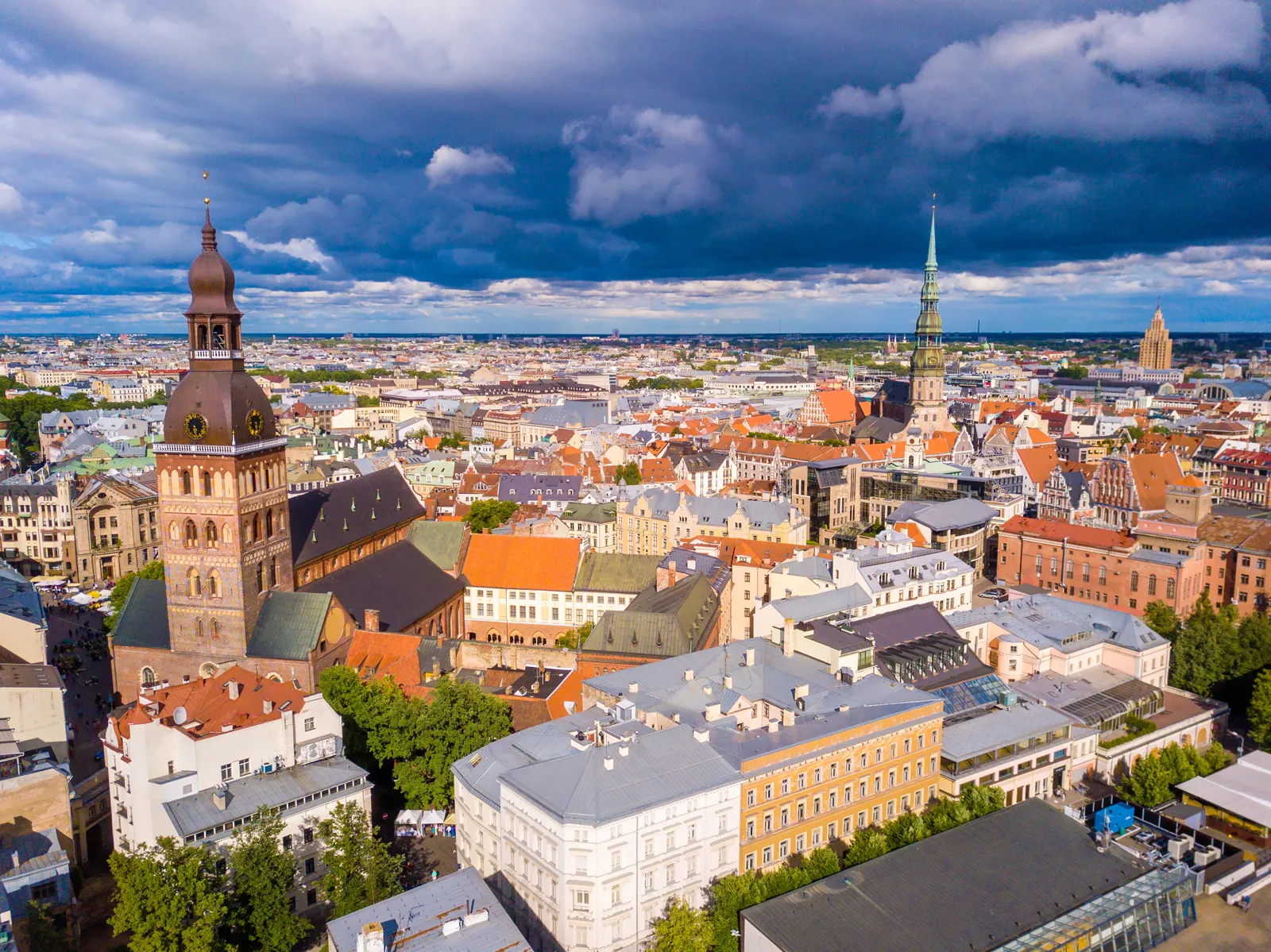
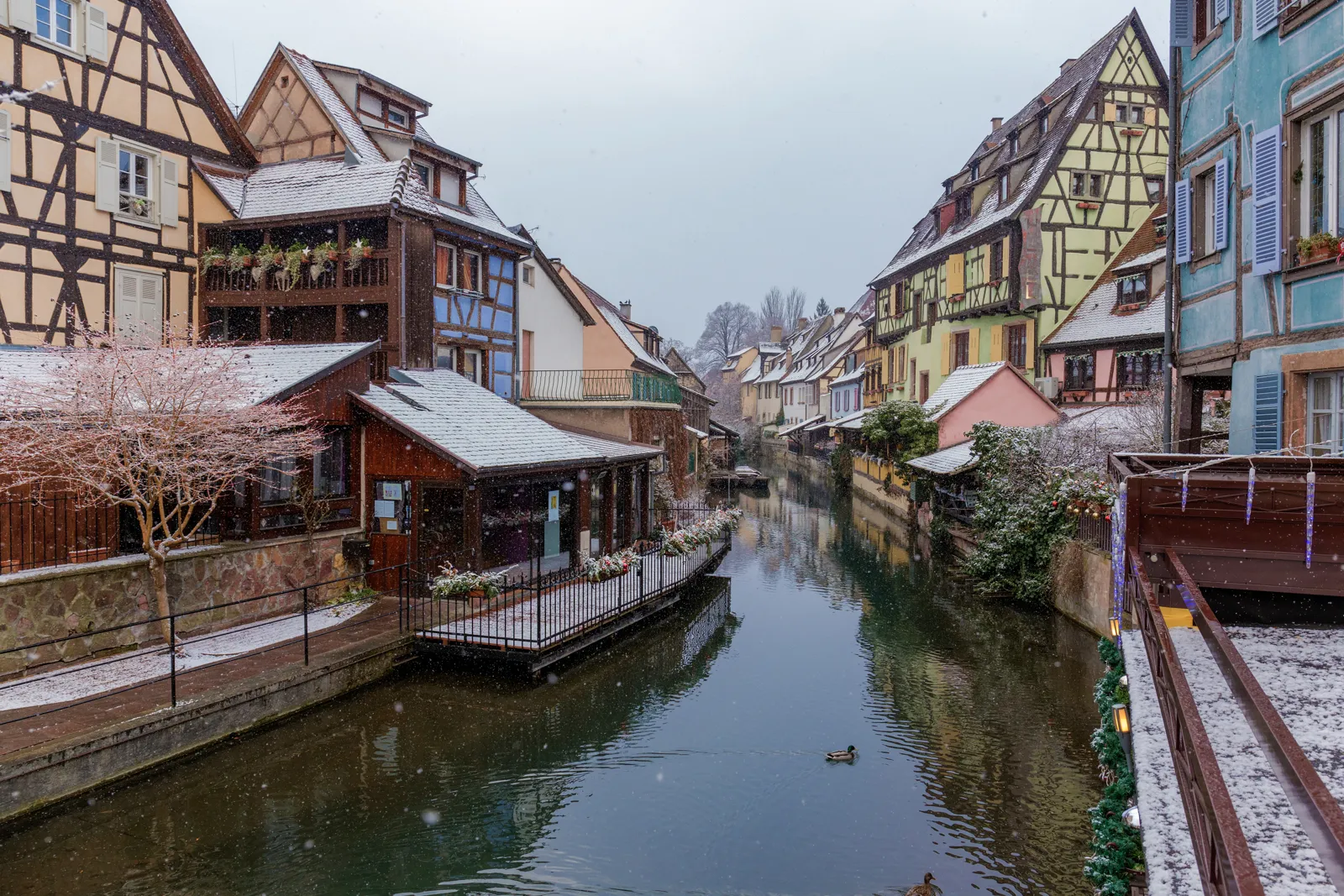
What are the best things to do in Salzburg? Ride the funicular up to Hohensalzburg Fortress, explore the baroque old town, a UNESCO World Heritage Site, from the Getreidegasse to Mozart’s birthplace, visit the cathedral and the DomQuartier, stroll through the Mirabell Gardens, discover St. Peter’s Cemetery and, on the edge of town, the trick fountains of Hellbrunn Palace. To visit Salzburg, allow 2 days, or 3 to 4 with Hallstatt or Berchtesgaden; the best time is May to September, plus December for the Christmas markets.
At the foot of the Alps, on the Salzach River, Salzburg is Mozart’s birthplace and home to a famous summer music festival. This guide brings together the highlights, two itineraries, the budget, the neighborhoods and the month-by-month climate from the Austrian weather service, with a comparison most guides leave out: Salzburg gets almost twice as much rain as Vienna.
Our travel deals for Salzburg
Affiliate links: we earn a commission, at no extra cost to you.
FlightsKiwi.comCompare flights and airline combinations to Salzburg.
Towering over the city from the Festungsberg, it is one of the largest surviving medieval fortresses in Central Europe. The funicular gets you up in a minute; you can also walk. Inside: the princes’ apartments, the fortress museum and views over the old town and the Alps. Walk back down via the Mönchsberg to extend the outing.
The old town, the cathedral and the DomQuartier
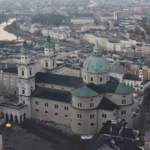
Salzburg’s historic center is a UNESCO World Heritage Site. Around the Residenzplatz and its fountain, the baroque cathedral, where Mozart was baptized, and the Residence of the prince-archbishops form the DomQuartier, a museum circuit linking state rooms, a picture gallery and the cathedral treasury.
The Getreidegasse and Mozart’s birthplace
A narrow shopping street with wrought-iron signs, the Getreidegasse is home at No. 9 to Mozart’s birthplace, now a museum: instruments, portraits and family documents. The Mozart Residence, across the Salzach on Makartplatz, completes the visit.
St. Peter’s Abbey and Cemetery
At the foot of the cliff, St. Peter’s Cemetery, with its wrought-iron grilles and catacombs carved into the rock, is one of the most peaceful places in the city. The neighboring Benedictine abbey is one of the oldest in the German-speaking world. Higher up, the Benedictine Nonnberg Abbey is still an active convent.
Mirabell Palace and Gardens
On the right bank, the baroque gardens of Mirabell Palace offer the most famous view of the cathedral and the fortress. The Marble Hall hosts concerts. The gardens, free to enter, were also filming locations for The Sound of Music, and many themed tours include them.
The Mönchsberg and the Kapuzinerberg
A lift cut into the rock goes up to the Mönchsberg, where the Museum of Modern Art has a panoramic terrace; paths follow the ramparts to the fortress. Opposite, the wooded Kapuzinerberg hill offers other, quieter viewpoints.
Hellbrunn Palace and its trick fountains
About twenty minutes south by bus, Hellbrunn Palace, built in the early 17th century for a prince-archbishop, is famous for its trick fountains, surprise jets that splash visitors; they operate in the warmer months. The park hosts a Christmas market in December.
Day trips: Hallstatt, Berchtesgaden, Untersberg
The village of Hallstatt and the Salzkammergut lake district make an easy day trip. On the German side, Berchtesgaden, its salt mine, Lake Königssee and the Eagle’s Nest are very close: see also our guide to Germany. The Untersberg cable car, on the edge of the city, climbs above 1,700 m (5,577 ft).
Itinerary: Salzburg in 2 days (and more)
Day 1, morning: Hohensalzburg Fortress, then down via St. Peter’s Cemetery
Day 1, afternoon: the cathedral and DomQuartier, Residenzplatz, the Getreidegasse and Mozart’s birthplace; a concert in the evening
Day 2, morning: Mirabell Gardens, the Mozart Residence, the Kapuzinerberg
Day 2, afternoon: Hellbrunn Palace and its trick fountains (in the warmer months), or the Mönchsberg and the Museum of Modern Art
Days 3 and 4: Hallstatt and the Salzkammergut; Berchtesgaden and the Königssee
Salzburg combines well with Vienna, linked by direct trains, with Munich, or with Slovenia farther south.
Salzburg or Vienna: rainfall in figures
Pressed against the Alps, Salzburg catches the clouds that bank up against the mountains: it is one of the wettest cities in Austria, known for its typical summer drizzle, the « Schnürlregen ». Vienna, to the east, is much drier. We compared precipitation month by month.
Month
Salzburg
Vienna
Salzburg gets…
January
59 mm (2.3 in)
37.6 mm (1.5 in)
1.6 times more
February
53 mm (2.1 in)
33.5 mm (1.3 in)
1.6 times more
March
87 mm (3.4 in)
46.3 mm (1.8 in)
1.9 times more
April
78 mm (3.1 in)
39.6 mm (1.6 in)
2.0 times more
May
115 mm (4.5 in)
78.3 mm (3.1 in)
1.5 times more
June
151 mm (5.9 in)
82.0 mm (3.2 in)
1.8 times more
July
158 mm (6.2 in)
80.3 mm (3.2 in)
2.0 times more
August
164 mm (6.5 in)
73.8 mm (2.9 in)
2.2 times more
September
112 mm (4.4 in)
67.3 mm (2.6 in)
1.7 times more
October
73 mm (2.9 in)
47.7 mm (1.9 in)
1.5 times more
November
72 mm (2.8 in)
42.9 mm (1.7 in)
1.7 times more
December
72 mm (2.8 in)
39.9 mm (1.6 in)
1.8 times more
Destination de Voyage calculation based on GeoSphere Austria (formerly ZAMG): Salzburg Airport, average precipitation 1981-2010; Vienna-Innere Stadt, 1991-2020 normals. The periods differ slightly, but the order of magnitude holds.
Over the year, Salzburg gets about 1,194 mm (47.0 in), compared with 669 mm (26.3 in) in Vienna, or 1.8 times more.
Summer is the wettest season in Salzburg: 158 mm (6.2 in) in July and 164 mm (6.5 in) in August, often as showers and thunderstorms.
In practice: pack an umbrella in every season and keep an indoor visit (DomQuartier, the Mozart houses, Haus der Natur) for rainy afternoons.
The best months are May to September, with 19 to 24 °C (66 to 75 °F) in the afternoon. This is also the wettest period: showers are frequent in June, July and August. The Salzburg Festival, in late July and August, pushes up accommodation prices. September is a good compromise: an average high of 19.9 °C (68 °F), less rain and fewer crowds. Winter is cold (−3.6 °C (26 °F) average low in January), but Advent draws visitors with its Christmas markets on Cathedral Square and at Hellbrunn.
roughly €30 to €50 (fortress, DomQuartier, concert)
Total
roughly €80 to €120 per person per day
roughly €180 to €280 per person per day
Rough estimates excluding flights, much higher during the festival. The city’s tourist card bundles transportation and admissions: do the math based on your plans.
Getting around Salzburg
From the airport: W. A. Mozart Airport is a few kilometers from the center, linked by trolleybus.
By train: direct services from Vienna and Munich; the main station is about a 20-minute walk from the old town.
In town: the old town is pedestrianized; buses and trolleybuses serve the rest. Validate your ticket before your journey: the UK FCDO warns of on-the-spot fines of €100 to €500 otherwise.
Day trips: buses to Hellbrunn, the Untersberg and Berchtesgaden; train and bus to Hallstatt.
By car: a vignette (sticker) is required on Austrian motorways and expressways (UK FCDO, GOV.UK); use park-and-ride car parks, as the center is hard to access. US drivers need an international driving permit or an official translation with their US license (U.S. Department of State).
Where to stay in Salzburg
Area
Best for
Strengths
Old town (left bank)
First visit, couples
In the heart of the sights; more expensive
Right bank (Linzergasse, Mirabell)
A good compromise
Relatively quiet, walking distance to everything
Around the station
Tight budgets, day trips
Convenient for trains and buses
Nonntal and the south of the city
Peace and quiet
Close to Hellbrunn, at the foot of the fortress
Book several months ahead for the summer festival and Advent weekends.
Entry requirements, health and safety
US citizens: Austria follows Schengen rules. According to the U.S. Department of State (travel.state.gov, last updated September 10, 2026), a visa is required for stays longer than 90 days; your passport should be valid for at least three months beyond your stay, and you may be asked to show proof of sufficient funds and a return ticket.
UK citizens: according to the UK FCDO (GOV.UK, updated 11 August 2026), you can travel to the Schengen area, including Austria, without a visa for up to 90 days in any 180-day period. Your passport must have been issued less than 10 years before you arrive and be valid for at least 3 months after the day you plan to leave the Schengen area. Under the EU Entry/Exit System (EES), you may have to register your fingerprints and photo at the border.
Health: the FCDO advises checking vaccine recommendations at least 8 weeks before your trip and lists tick-borne diseases among the health risks in Austria, which matters if you plan to hike. UK travelers need a GHIC or EHIC for medically necessary state healthcare, which does not replace travel insurance (GOV.UK). Local hospitals do not bill American insurers directly (U.S. Department of State).
Safety: crime levels are generally low, with pickpocketing in city centers and stations (UK FCDO). The FCDO states that terrorists are likely to try to carry out attacks in Austria: stay vigilant in public places.
Mountains: the weather changes quickly at altitude (Untersberg, Salzkammergut): the FCDO advises checking forecasts and conditions and being properly equipped.
Emergencies: 112, ambulance 144, police 133, fire 122 (UK FCDO).
Money: the euro; cards are accepted almost everywhere, but some cafés and small shops prefer cash.
Internet: check your provider’s roaming rates before you leave; see our eSIM guide.
Food: Salzburger Nockerl (a soufflé), schnitzel, strudel; « Mozartkugeln » chocolates are sold everywhere.
Concerts: chamber music concerts and dinner concerts all year round, on top of the summer festival.
Sundays: most shops are closed.
Frequently asked questions
How many days do you need in Salzburg?
Two days for the fortress, the old town, Mirabell and Hellbrunn; three to four days with Hallstatt and Berchtesgaden.
What is the best time to visit Salzburg?
May to September, with 19 to 24 °C (66 to 75 °F) in the afternoon, and December for the Christmas markets. September combines mild weather, less rain and fewer crowds.
Does it rain a lot in Salzburg?
Yes: about 1,190 mm (46.9 in) a year according to GeoSphere Austria, almost twice as much as Vienna, with a peak in summer.
How do you get from Vienna to Salzburg?
By direct train; check current journey times and fares on oebb.at. Salzburg is also linked by direct trains to Munich.
Can you fly to Salzburg?
Yes, Salzburg has an international airport, but its network is limited; many travelers fly into Munich or Vienna and continue by train. Check current routes when you book.
What Sound of Music locations can you see in Salzburg?
The Mirabell Gardens, Nonnberg Abbey and the Hellbrunn area were used as film sets; themed guided tours link them together.
Our sources
GeoSphere Austria (formerly ZAMG): Salzburg Airport station (temperatures 1991-2020, precipitation 1981-2010, sunshine 1971-2000) and Vienna-Innere Stadt (1991-2020), via the climate tables of the Wikipedia articles « Salzburg » and « Vienna »
Destination de Voyage calculation: Salzburg/Vienna precipitation ratio
Entry, health, safety and driving information read on 26 October 2026: U.S. Department of State, Austria country information (travel.state.gov, last updated September 10, 2026), and UK FCDO, foreign travel advice for Austria (GOV.UK, updated 11 August 2026)


 FlightsKiwi.comCompare flights and airline combinations to Salzburg.Compare flights